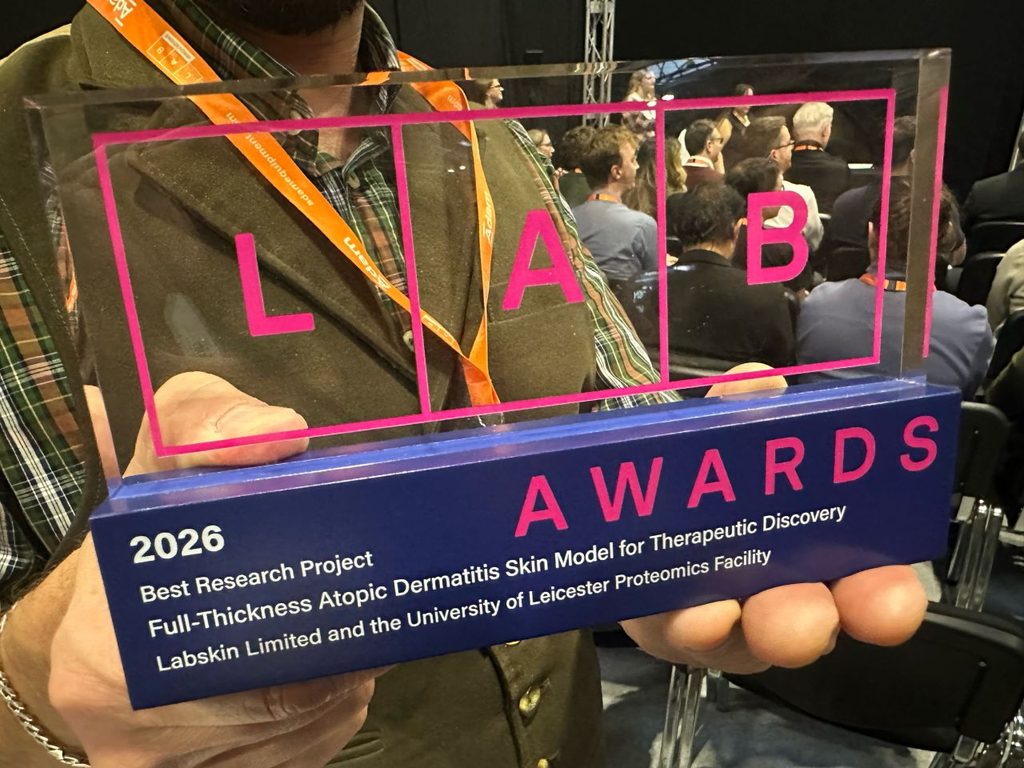
Labskin Limited, in collaboration with the University of Leicester Proteomics Facility, has been recognised with the Best Research Project Award for its innovative work developing a full-thickness 3D skin model of atopic dermatitis. The project addresses a significant challenge in dermatological research: the need for more accurate, human-relevant models that replicate the complexity of inflammatory skin conditions and help accelerate the development of new treatments.
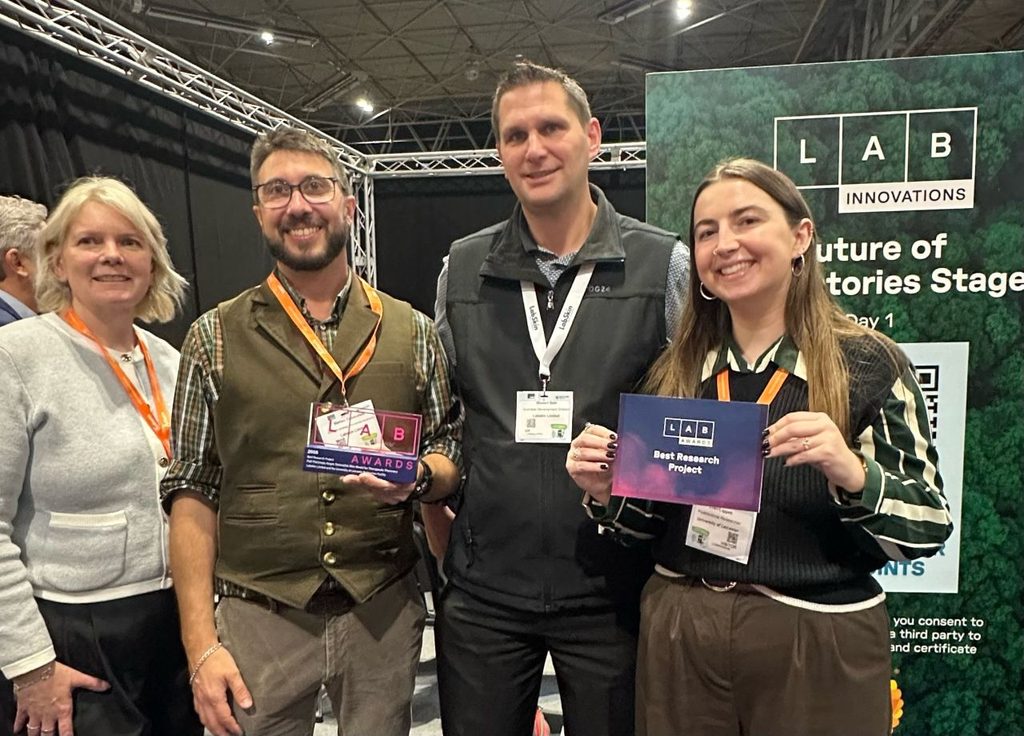
Dr Nicola Kingswell, Matteo Capocefalo, Dr Stewart Sale and Ellen Liggett from the University of Leicester Proteomics Facility.
“This is a great award to receive and showcases how our 3D skin models in collaboration with cutting edge proteomic technologies can provide data that will ultimately have clinical impact”
Dr Nicola Kingswell, Scientific Director and Owner of Labskin Limited
The collaboration brought together Labskin’s expertise in advanced skin modelling and the University of Leicester’s state-of-the-art proteomics capabilities to develop and characterise a model that closely replicates the key features of atopic dermatitis. Using mass spectrometry-based analysis, the researchers identified more than 6,500 proteins in each sample, revealing distinct molecular differences between healthy and diseased skin. Crucially, testing with a Janus kinase (JAK) inhibitor demonstrated measurable improvements in the disease characteristics, supported by changes in protein expression, providing strong evidence of the model’s potential for therapeutic evaluation.
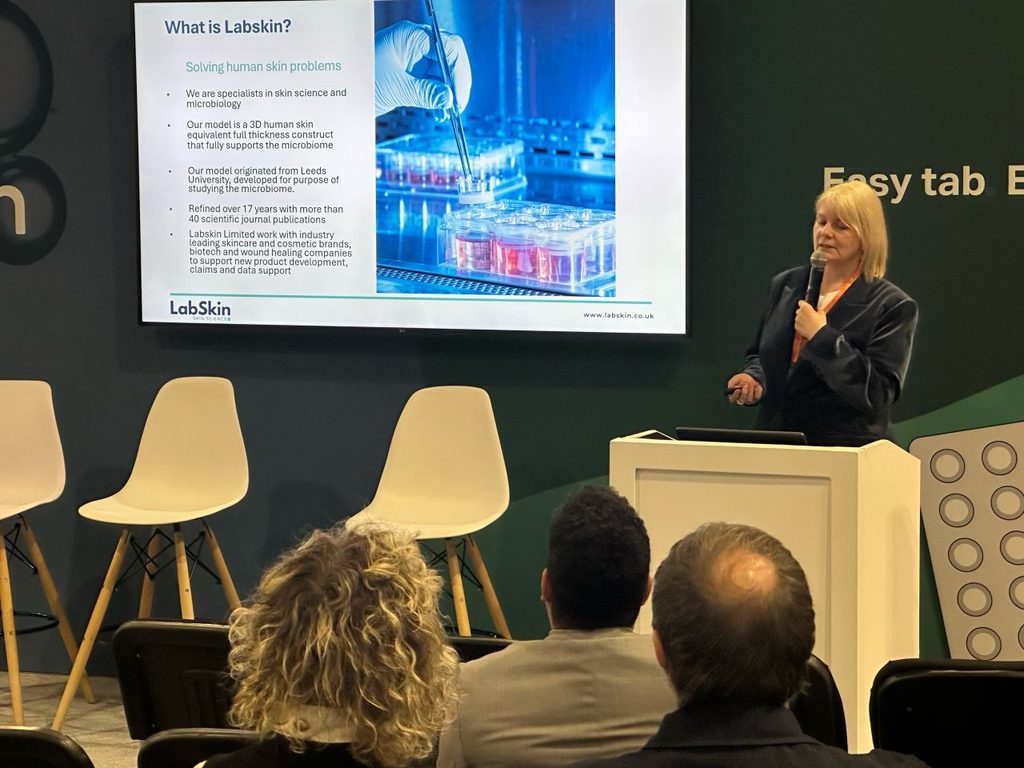
“This award is a wonderful recognition of the quality and impact of the collaboration with industry, and an excellent example of how research excellence can be translated into innovation and commercial opportunity.”
Professor Don Jones, Head of the University of Leicester Proteomics Facility.
This Lab Innovations award recognises the strength of the collaboration and its contribution to advancing skin disease research and drug discovery. The combination of realistic tissue engineering with detailed molecular analysis, the project offers pharmaceutical and biotechnology companies a valuable platform for investigating disease mechanisms, assessing potential treatments and supporting the development of more effective therapies.